
· Williams Digger Services
Fence Line Clearance: Banana Palm Removal and Large Planterbox in Glenfield
Replacing a boundary fence can sound straightforward until you look at what's actually growing or sitting along the fence line. Established trees, palms, planter boxes and old fencing can all need to come out before the new fence work can begin.
That was the situation at this Glenfield property. The customer and her neighbour had agreed to replace their shared fence and split the cost, but large clusters of banana palms and a substantial planter box were obstructing the fence line. Our job was to carry out the fence line clearance so the area could be prepared for the replacement fence.
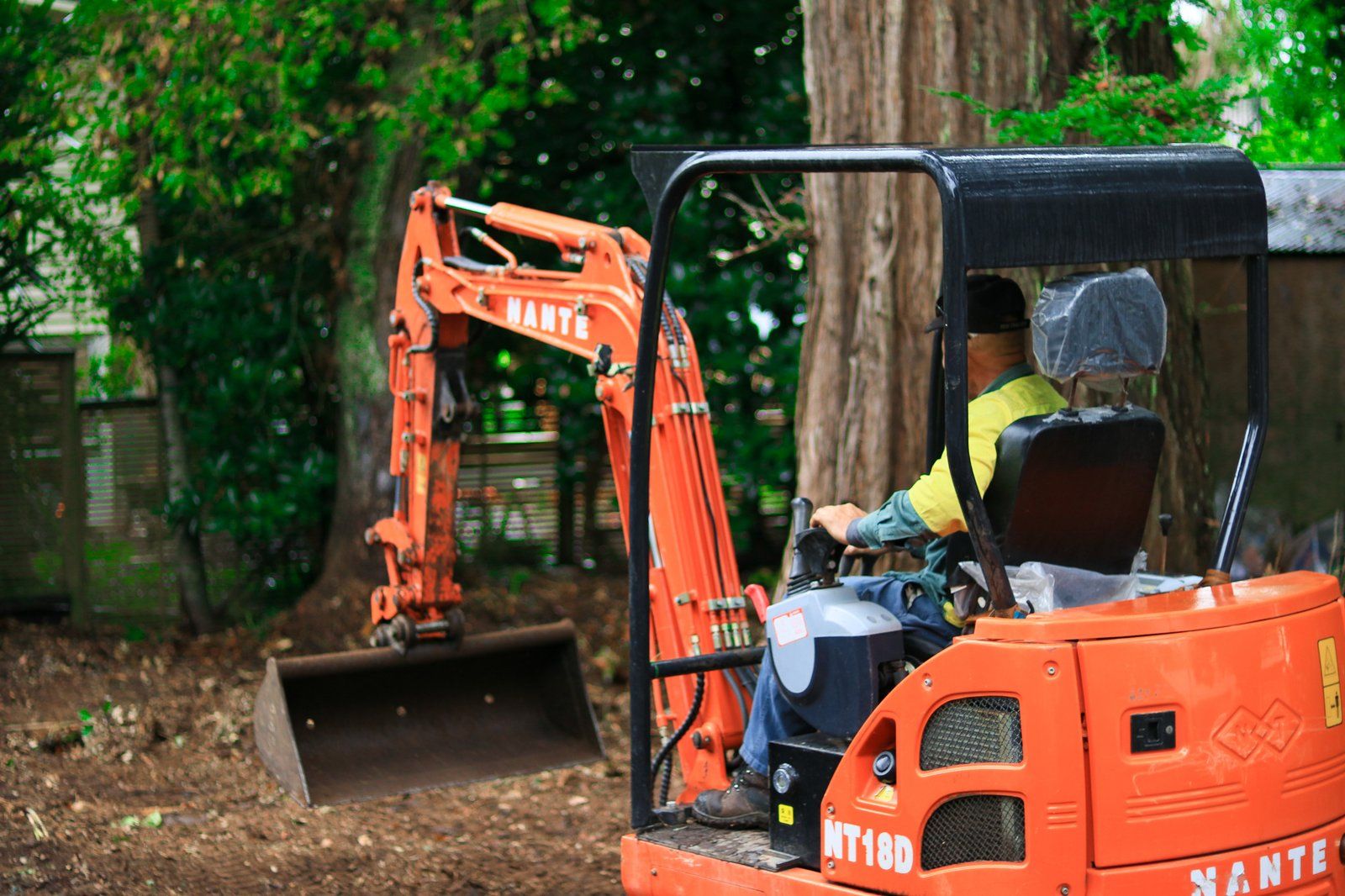
With our digger able to access the site, we could tackle the heavier removal efficiently. By the time we finished, the banana palms and planter box had been uplifted, the ground levelled and the exisitng corrugated iron/ timber fence removed as requested.
Project Overview
The customer first contacted us through our online form looking for tree and vegetation clearance along a boundary fence in Glenfield, on Auckland's North Shore.
There was already an agreement between the two neighbours to replace the fence and share the cost. Before that could happen, however, the existing fence line needed some serious clearing.
Large clusters of banana palms had established themselves along the boundary, while a large planter box was also occupying the area needed for the future fence work. The customer also wanted the existing timber/corrugated iron fence to be removed.
Rather than trying to price a job of this size purely from a description, we visited the property and completed an on-site assessment. We could see exactly what needed removing, check the access and plan how we could use machinery to make the job more manageable.
We then provided a quote and organised the work to begin the following week.
For property owners dealing with similar boundary preparation, our fencing services in Auckland include fence line clearing alongside fence and gate work. Our wider property maintenance services can also help when a project involves several different jobs around the property.
Scope of Work
The goal was simple: clear the obstructions and leave a more workable fence line for the next stage of the project.
Our scope included:
- Completing an on-site assessment of the boundary.
- Planning access for the machinery and team.
- Removing the large clusters of banana palms.
- Uplifting the large planter box.
- Removing the existing timber/corrugated iron fence.
- Clearing the obstructed fence line.
- Levelling the ground after the removal work.
We attended with our truck, digger and gardening team. Before getting started, we explained the plan to both the customer and her neighbour so everyone understood how we were approaching the work.
Having both neighbours involved was useful. When you're working along a shared boundary, clear communication helps keep the project straightforward, particularly when the clearance is being completed ahead of a jointly agreed fence replacement.
If you're planning work on a shared boundary, it's also worth understanding the rules around fencing responsibilities. The Ministry of Justice guidance on fences and neighbours explains the Fencing Act process and how neighbouring property owners can approach fencing costs and disagreements.
Challenges Overcome
The biggest physical challenge was the amount of established growth and material sitting directly where the replacement fence needed to go.
Large banana palms aren't the same as clearing a few weeds or trimming back a hedge. In this case, we needed to remove substantial clusters and uplift them from the area rather than simply cutting back the visible growth.
The large planter box created another obstruction. Leaving it in place wouldn't have achieved what the customer needed, so it was removed as part of the clearance.
Fortunately, access worked in our favour.
Our digger could reach the work area, which made removing the large palms and planter box much more manageable. That's something we always consider when assessing this type of project. Good machinery access can change how we approach a substantial garden or fence-line clearance.
Once the main obstructions were out, we could level the ground and remove the timber/corrugated iron fence requested by the customer.
For homeowners planning similar work, Auckland Council provides information about when you may need building consent for fences. Requirements depend on the proposed fence and site, so it's worth checking before construction starts.
Project Execution
We approached the Glenfield clearance in three straightforward stages.
1. Job Evaluation
The initial enquiry came through our online form. From there, we arranged an on-site assessment so we could properly inspect the fence line.
Seeing the site in person allowed us to assess the banana palms, planter box, existing timber/corrugated iron fence and — importantly — machinery access.
After the assessment, we provided the customer with a quote and arranged to return for the clearance work.
2. Work Begins
When the scheduled work began, we arrived with our truck, digger and gardening team.
Before starting, we explained the plan to both neighbouring parties. Once everyone was clear on what was happening, our team got into the removal work.
Because we had good access for the digger, we were able to uplift the large banana palm clusters and planter box much more effectively than trying to tackle the entire job manually.
The existing timber/corrugated iron fences also removed as requested.
3. Completion Check
After removing the major obstructions, we levelled the ground so the area was left in a more practical condition for the next stage.
The important outcome wasn't simply that the garden looked clearer. The purpose of the project was to remove what was blocking the shared fence line, and that's what we achieved.
Both the customer and her neighbour were delighted with the result.
You can see other examples of the different jobs our crews tackle in our property maintenance projects.
Client Experience
One of the best parts of this Glenfield project was having both neighbours on the same page.
They had already agreed that the fence needed replacing and that they would share the cost. Our role was to take care of the physical obstacles preventing that next stage from moving ahead.
We made sure both parties understood our plan before starting. From there, our team could concentrate on the heavy clearing work.
By the end of the job, the large banana palms were gone, the planter box had been uplifted, the timber/corrugated iron fence had been removed and the ground had been levelled.
Both neighbours were delighted with the completed clearance.
That's a result we appreciate because fence projects often involve more than the fence itself. Getting the preparation right can make everything that follows considerably easier.
Final Thoughts
If you're planning to replace a fence, have a proper look along the entire boundary before arranging the installation.
Trees, palms, hedges, planter boxes, old fencing and other obstacles can all affect access to the fence line. Sorting those issues first gives the fencing work a clearer starting point.
This Glenfield project is a good example. The customers already knew what they wanted to achieve with their shared boundary, but the banana palms and planter box needed to be dealt with before the project could progress.
Because we could bring in the right team and machinery, we were able to clear the large obstacles, remove the timber/corrugated iron fence and level the area as part of one coordinated job.
If you're dealing with an overgrown or obstructed boundary in Auckland, our fence line clearing and fencing services can help get the area sorted.
Give us a call on 0800 514 514 or contact our team for a free, no-obligation quote.
FAQ
What is included in fence line clearance?
It depends on what's obstructing the boundary. On this Glenfield project, our work included removing large clusters of banana palms, uplifting a large planter box, removing the existing timber/corrugated iron fences and levelling the ground. We assess each property individually because access, vegetation and existing structures can vary considerably from one fence line to another.
Can you remove banana palms before a new fence is installed?
Yes, banana palms can be removed when they're obstructing a fence line. For this Glenfield project, large clusters were sitting where the replacement fence work needed to take place. We used our digger to uplift the palms as part of the wider clearance rather than simply trimming them back.
Can you use a digger for fence line clearing?
Where access and site conditions allow, machinery can make substantial clearance work much easier. At this property, we had good access for our digger, which helped us remove the large banana palm clusters and planter box. We normally assess access before deciding how best to approach the job.
Can you remove old fencing as part of the clearance?
Depending on the agreed scope, we can include existing fencing in the clearance work. At this Glenfield property, the customer specifically requested removal of the timber/corrugated iron, so we included that in the job alongside the vegetation and planter-box removal.
Do neighbours have to share the cost of replacing a fence?
Shared boundary fencing in New Zealand is covered by the Fencing Act 1978, and the circumstances can vary between properties. In this particular case, the customer and her neighbour had already agreed to replace the fence and share the cost. For general guidance, the Ministry of Justice explains fencing responsibilities and the Fencing Act process.
Should fence line clearing happen before the fencing contractor starts?
When vegetation, planter boxes or old structures are blocking the proposed fence line, clearing them beforehand can give the fencing work a much better starting point. That's exactly why we were brought into this Glenfield project. We removed the major obstructions and levelled the ground so the boundary was ready to move on to its next stage.