
· Williams Digger Services
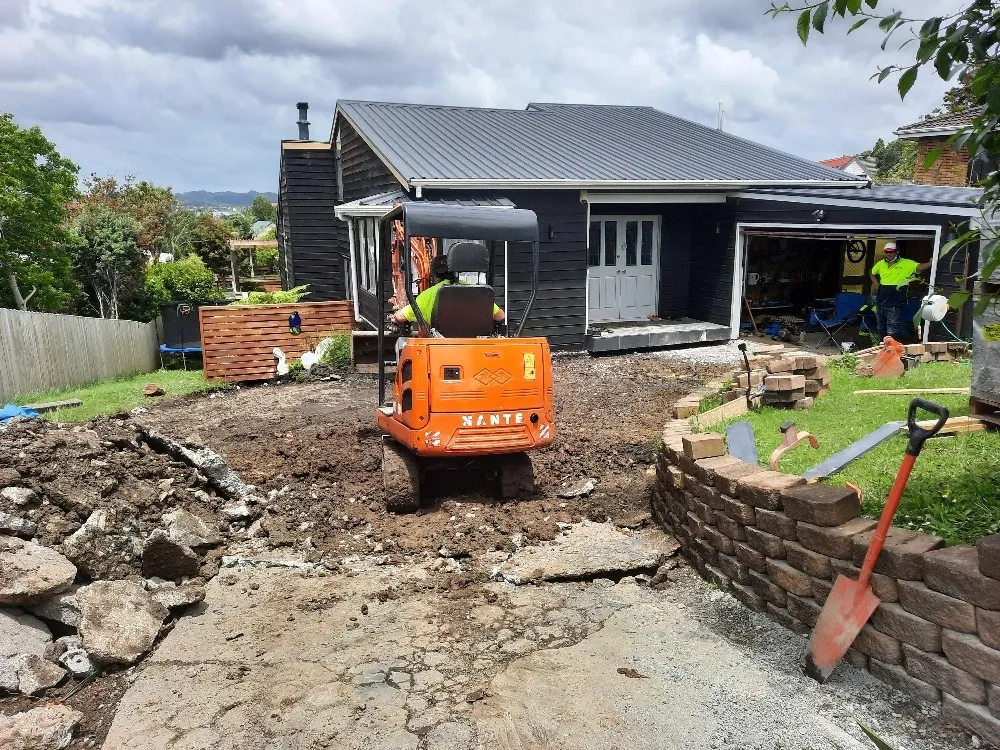
Digging close to fences, trees and retaining walls needs care. This guide covers what to check before you start, so your excavation work doesn’t damage structures or roots that matter.
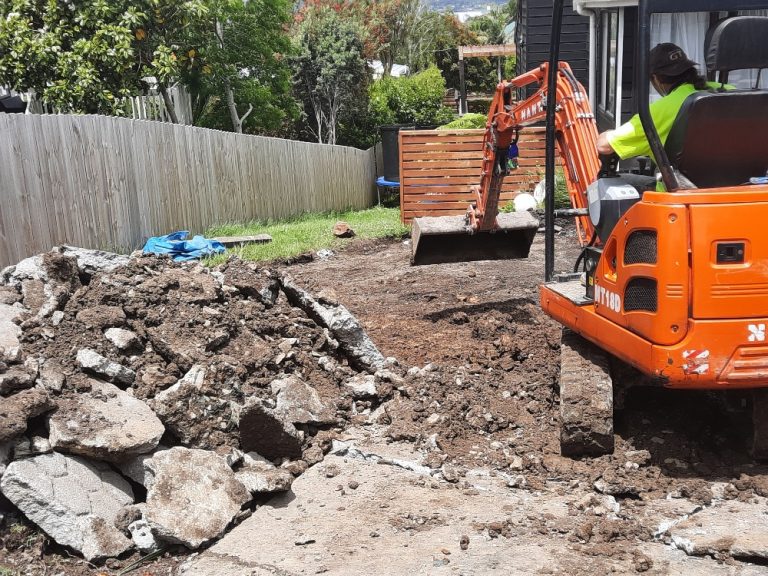
Check who owns the fence or wall
Before any digging near a fence or retaining wall, find out who owns it. If it sits on the boundary between your property and your neighbour’s, you may both own it. If it’s entirely on your side, you own it. If it’s on their side, they do.
This matters because you’re responsible for damage to structures you own, and you need permission to work near or against a neighbour’s structure. A quick conversation with your neighbour can save trouble later.
If you’re unsure about the boundary, a surveyor can confirm it. Check the title documents for your property too—they often show where the boundary runs.
Understand how digging can undermine footings and posts
Fences and retaining walls stand on footings or posts driven into the ground. Digging too close can expose or weaken these foundations, causing the structure to shift or collapse.
The risk depends on how deep you need to dig and how close you get. A shallow dig a metre away may be safe; a deep trench right beside the wall is not. The ground type and the age of the structure also matter—older walls may be more fragile.
Tell your operator exactly where the fence or wall is and what you want to protect. They can plan the dig to keep a safe distance and avoid undermining anything.
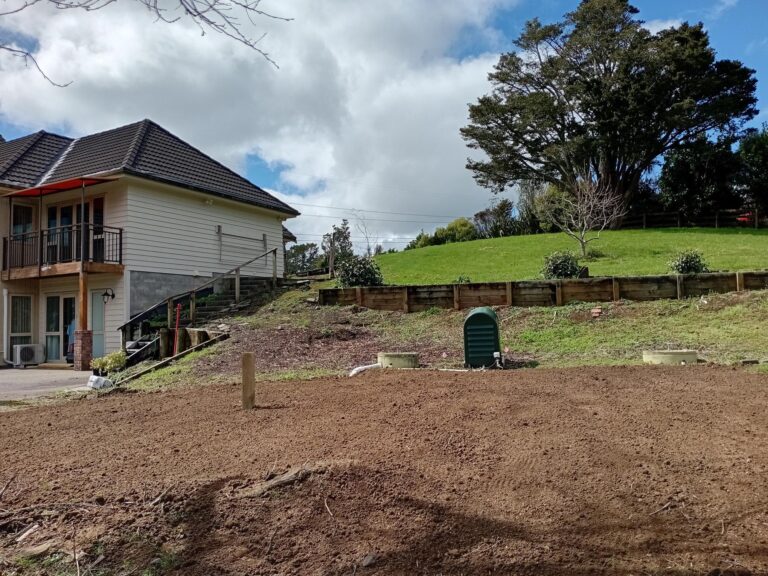
Protect tree roots—and know what can be cut
Trees near your dig site have root systems that spread underground. Cutting major roots can weaken or kill a tree you want to keep.
Small roots and fibrous growth can usually be cut without harm, especially if the tree is mature and well-established. Large structural roots—the ones that anchor and feed the tree—should be protected if possible.
If you’re not sure which roots matter, ask an arborist before you dig. Tell your operator which trees need protecting and where their root zones are. They can work around them or cut carefully if roots are in the way.
Retaining walls may need an engineer or council check
Retaining walls hold back soil and can be under significant stress. Digging nearby—especially if you’re removing soil or changing ground levels—can affect how the wall performs.
Depending on the wall’s height, age and condition, you may need an engineer to assess whether nearby digging is safe, or you may need to check with Auckland Council before excavation starts. It’s worth asking before you commit to the work.
If the wall shows signs of movement, cracking or leaning, treat it as a warning. Get professional advice before digging anywhere near it.
Give your operator clear information and photos
The more your operator knows about what’s on site, the better they can plan a safe approach.
Before work starts, send photos showing:
- The fence or wall and how close it is to where you want to dig
- Any trees nearby and which ones you want to protect
- The overall site layout and access
Measurements help too—gate width, distance from the wall to the dig area, and depth you need to go.
On the day, walk the operator through the site and point out anything you want protected. If something changes as they dig—like an unexpected root or a weak section of wall—they can stop and adjust the plan.
For digging near underground services (water, gas, power, drains), check Before You Dig at beforeudig.co.nz. It’s a free service that shows where services run, so you can plan safely.
Need a hand with your project?
Send us a few photos and the narrowest access width, and we will give you advice and a free quote. See our section clearing page for how we approach this kind of work. Our confirmed starting prices are on the digger hire prices page, or call 0800 514 514 (Monday to Saturday, 7am to 5pm).