
· Williams Digger Services
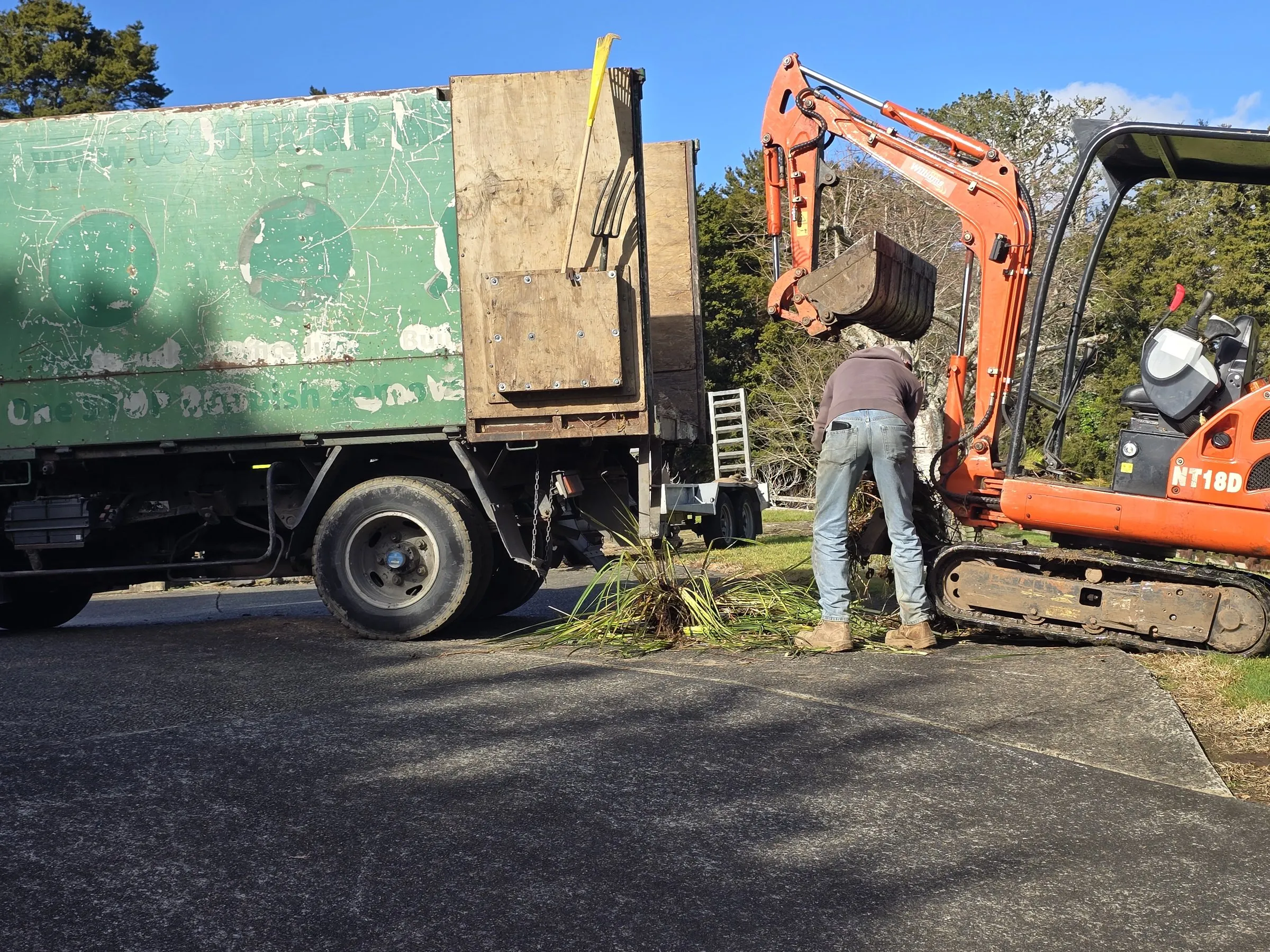
When you excavate a section, dig a trench or clear land, you’re left with soil that has to go somewhere. This guide walks you through your options—keeping it on site, moving it around your property, or having it removed—so you can plan the right approach before the work starts.
Three main options for excavated soil
Excavated soil doesn’t have to leave your property. You have three realistic choices: leave it where it falls, move it to another part of your section, or have it removed entirely.
Staying on site is the simplest option if you have space and a use for it. Moving soil around your property works well if you’re levelling a garden, building up a low area, or creating a base for landscaping. Removal makes sense when you don’t have room, when the soil is mixed with rubbish or tree roots, or when you simply don’t need it.
Reusing soil for levelling and fill
If your section needs levelling or you’re building up low spots, excavated soil is often perfect for the job. It’s already on site, so there’s no transport cost, and it can be spread and compacted as part of the same work.
This works especially well for landscaping projects, garden preparation, or creating a level base for new structures. The soil can be moved across your property by the same machine doing the excavation, making it efficient and practical.
If you’re planning to reuse soil this way, let us know when you ask for a quote. We can factor it into the approach and make sure the material ends up where you need it.
When removal makes sense
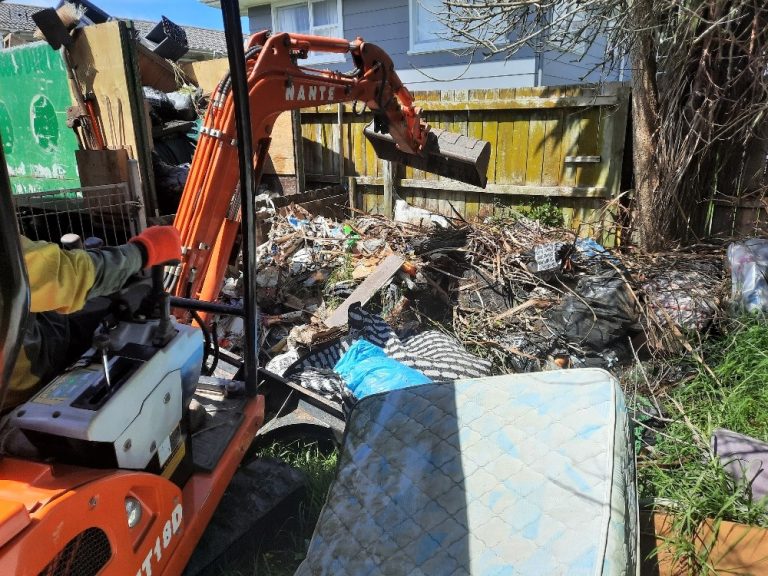
Removal becomes the better choice in several situations. If your section is small or already crowded, there may be nowhere practical to store excavated material. If the soil is mixed with tree roots, rubble or other waste, it’s often easier and cleaner to have it taken away rather than trying to separate it on site.
Sometimes the soil itself isn’t what you need—perhaps it’s clay-heavy, compacted, or unsuitable for the landscaping or building work that follows. In those cases, removal clears the site and lets you bring in fresh material if needed.
Removing soil does add to the cost, but it leaves your section clear and ready for the next stage of work.
Storage on site: what to expect
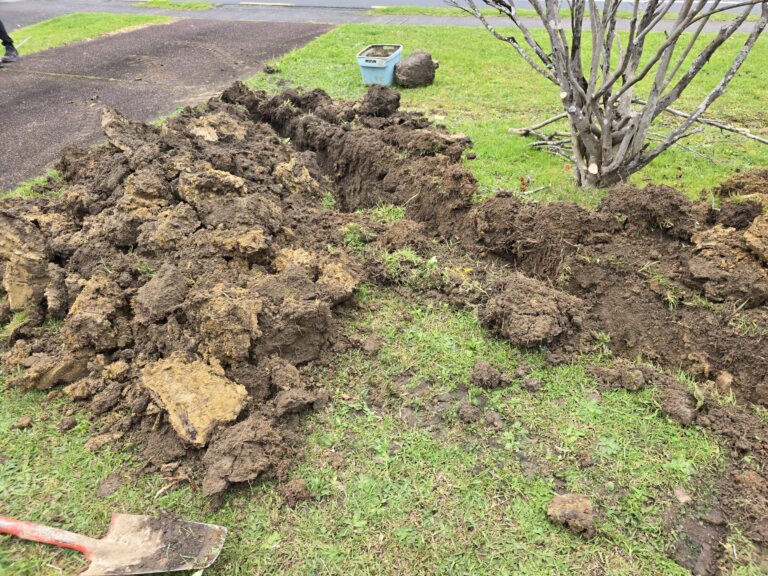
If soil stays on your property while you decide what to do with it, it will be stacked in a mound. This takes up space and will affect your lawn or access while it’s there. Depending on the volume, it can occupy a significant area.
If the mound sits for a while, grass and weeds may grow on it, and heavy rain can make access muddy. If you need to move vehicles or equipment around the site during other work, a large soil mound can get in the way.
Planning ahead helps. If you know you want the soil removed, it’s often simpler to have it taken away as part of the original excavation rather than storing it and arranging removal later.
Planning your quote: what to tell us
The cost of soil removal depends on how much soil there is, how easy it is to access and load, and how far it needs to go. That’s why it’s important to describe the job clearly when you ask for a quote.
Tell us what you’re excavating (a section clearance, a trench, a foundation dig), roughly how deep and how much material you expect, and whether the soil will stay on site or be removed. Let us know if the site has tight access, if there are trees or structures nearby, and where any removed material would need to go.
Send photos if you can, and mention any constraints—narrow gates, steep slopes, or neighbours close by. The more detail you give, the more accurate the quote will be. Visit our digger hire prices page to see how we work, then call for a free, no-obligation quote.
Need a hand with your project?
Send us a few photos and the narrowest access width, and we will give you advice and a free quote. See our earth moving and excavation page for how we approach this kind of work. Our confirmed starting prices are on the digger hire prices page, or call 0800 514 514 (Monday to Saturday, 7am to 5pm).