
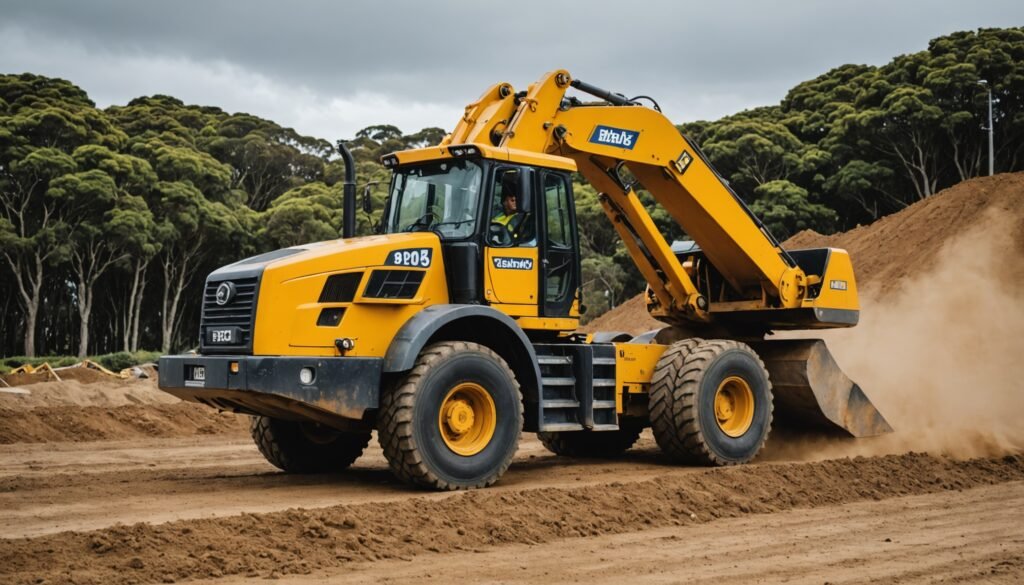
What separates a smooth earthmoving project from a budget-busting nightmare? For Auckland property owners, the answer often comes down to understanding one thing: your ground.
Auckland’s volcanic geology isn’t just interesting—it’s a factor that directly affects excavation costs, equipment choices, and project timelines. From the basalt rock lurking beneath your section to the clay composition that shifts with the seasons, these ground conditions make local experience essential for any earthmoving project.
Whether you’re preparing a site for a new home, installing drainage, or clearing land for commercial development, this guide walks you through the earthmoving services available, the factors that drive pricing, and exactly what to look for when hiring a contractor. Connect with experienced Auckland earthmoving professionals who can handle your project’s unique challenges.
- Earthmoving services cover projects from pool excavations to commercial site clearing: Residential work includes driveway preparation, trenching, drainage installation, and retaining wall foundations, while commercial projects involve land clearing, bulk earthworks, and large-scale site preparation with equipment matched to job scope.
- Auckland’s volcanic geology creates unique excavation challenges: Basalt rock, volcanic soil, and clay composition require contractors with local experience and appropriate machinery—factors that directly influence both methodology and project costs.
- Ground conditions and site access drive pricing more than project size alone: Rocky terrain, limited access, slope gradients, and proximity to existing structures affect equipment choice and labor requirements, making thorough site assessment essential before any quote.
- Council consent requirements depend on project scale and location: Most earthworks fall under the Resource Management Act, with larger projects requiring specific consents—understanding these requirements early prevents costly delays.
- Hiring locally experienced contractors ensures compliance and efficiency: Look for licensed operators with demonstrated Auckland project history, comprehensive insurance coverage, and transparent itemized quotes that account for ground conditions and access challenges.
The Evolution of Excavator Technology: What Every Construction Professional Needs to Know
The construction industry has witnessed remarkable technological advancements over the past decade, and excavators—often called diggers in New Zealand—have been at the forefront of this transformation. From hybrid power systems to AI-driven automation, modern excavator technology is reshaping how excavation projects are approached, making operations more efficient, safer, and environmentally responsible. Understanding these developments is essential for anyone involved in construction, earthmoving, or infrastructure development across Auckland and beyond.
At Digger Services NZ, we stay ahead of these innovations to deliver top-tier digger hire solutions in Auckland that leverage the latest technological capabilities. Whether you’re managing a residential subdivision, commercial development, or civil engineering project, familiarity with modern excavator technology can significantly impact your project’s success.
Telematics and Real-Time Fleet Management
One of the most impactful advancements in excavator technology is the integration of sophisticated telematics systems. Modern machines come equipped with sensors and connectivity modules that transmit real-time data on machine performance, fuel consumption, engine health, and operational hours. This technology enables project managers to monitor fleet efficiency from any location, schedule preventive maintenance before breakdowns occur, and optimize machine utilization across multiple job sites.
Fleet management software now provides dashboards that display critical metrics, allowing operators and supervisors to make data-driven decisions. For construction companies in Auckland, this means reduced downtime, lower operational costs, and improved project timelines—all of which contribute directly to profitability.
Electric and Hybrid Power Systems
Sustainability has become a core consideration in construction, and excavator manufacturers are responding with electric and hybrid models that dramatically reduce emissions and fuel consumption. Electric excavators produce zero direct emissions, making them ideal for urban environments with strict air quality regulations or indoor demolition projects. Hybrid models combine traditional diesel engines with electric motors, delivering fuel savings of up to 30% while maintaining the power required for demanding excavation work.
These innovations align with New Zealand’s growing focus on sustainable construction practices. By choosing modern digger information resources and partnering with hire companies that invest in eco-friendly equipment, construction firms can reduce their carbon footprint while meeting client expectations for environmentally responsible practices.
Automation and AI-Assisted Operations
Artificial intelligence is revolutionizing excavator operations through features like semi-autonomous digging, intelligent load sensing, and adaptive hydraulic systems. AI-assisted controls help operators maintain consistent performance levels regardless of their experience, automatically adjusting boom and arm movements to optimize digging efficiency. Some advanced systems can even complete repetitive tasks like trenching with minimal human intervention, freeing operators to focus on complex decision-making aspects of the project.
Collision avoidance technology, powered by cameras and proximity sensors, enhances site safety by alerting operators to hazards and automatically stopping machine movement when obstacles are detected. This feature is particularly valuable on crowded urban construction sites in Auckland where working near existing structures or other equipment requires heightened awareness.
GPS Guidance and 3D Machine Control
Precision excavation has been transformed by GPS-based 3D machine control systems. These technologies enable excavators to operate with centimeter-level accuracy, eliminating the need for traditional grade checkers and reducing survey costs significantly. Operators work from design models displayed on in-cab screens, with the system automatically controlling bucket depth and position to achieve the exact specifications.
This capability proves invaluable for projects requiring precise grading, such as road construction, drainage installation, and foundation preparation. The technology reduces material waste, rework, and the time required to achieve final grade—delivering measurable improvements in project efficiency and cost control.
The integration of these technologies represents a new era in excavation work, where machines work smarter, safer, and more sustainably than ever before. For construction professionals seeking to maximize their project’s potential, partnering with a digger hire provider in Auckland that offers technologically advanced equipment can provide the competitive edge needed in today’s demanding construction environment.
Conclusion
The evolution of excavator technology—from telematics and electric power systems to AI-assisted operations and GPS-guided precision—represents a fundamental shift in how construction projects are approached. These innovations deliver measurable benefits: reduced operational costs, improved safety outcomes, and sustainable practices that align with modern environmental expectations.
For construction professionals in Auckland and across New Zealand, staying informed about these advancements is no longer optional—it’s essential for maintaining competitive advantage. Explore digger information resources and partner with a digger hire provider in Auckland equipped with cutting-edge technology to elevate your next project.