
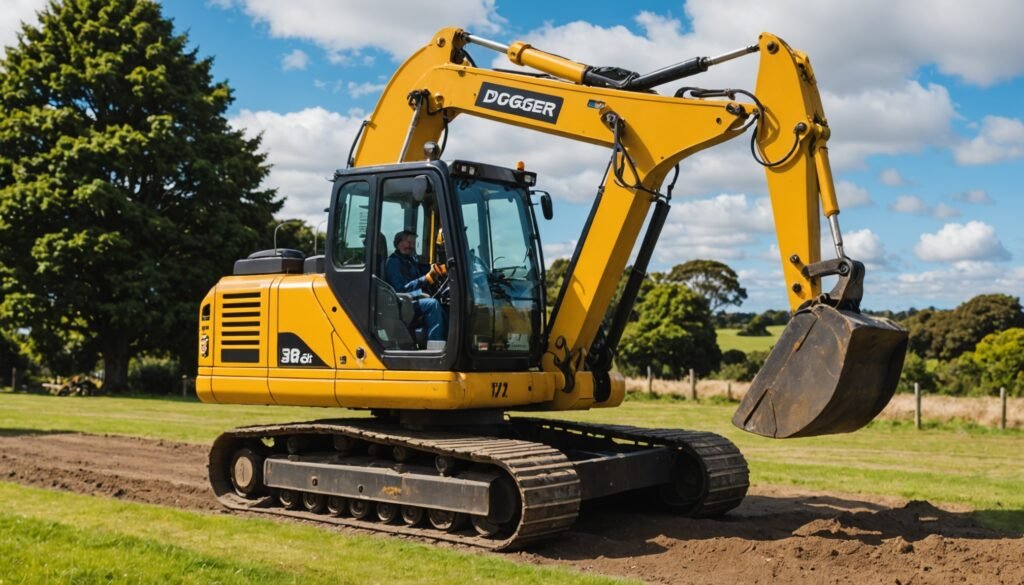
Hiring the wrong digger for your Auckland project can cost you days of delays and thousands in budget overruns. With Auckland’s unique ground conditions—volcanic basalt rock beneath the surface and reactive clay soils that shift with the weather—choosing the right machine isn’t just about size; it’s about matching equipment to your specific site challenges and project scope.
Whether you’re trenching for drainage, excavating for a pool, or preparing foundations for a retaining wall, understanding your digger hire auckland options empowers you to make informed decisions that keep your project on schedule and within budget.
This guide breaks down machine sizes, site access requirements, and the real cost factors behind digger hire, so you can compare local services with confidence and get the job done right the first time.
- Match digger size to your project scope: Mini diggers (1.5-3 tonne) handle tight residential sites and trenching, while medium-to-large excavators (5-20+ tonne) tackle major earthworks, pool excavation, and retaining wall foundations.
- Factor in Auckland’s volcanic soil and clay conditions: Basalt rock and reactive clay soils common across Auckland require machines with adequate breakout force—underestimating machine capacity leads to slow progress and cost overruns.
- Weigh operator hire against DIY operation: Hiring with an operator costs more but eliminates the learning curve, ensures safe operation near structures, and keeps your project on schedule—especially valuable for drainage, pool excavation, and demolition work.
- Account for site access and transport logistics: Measure gates, check for overhead clearances, and confirm whether the hire company includes delivery—narrow Auckland sections often require compact machines or creative machine placement strategies.
- Budget beyond daily hire rates: Long-term projects benefit from weekly rates (typically 30-40% cheaper than daily), but always factor in transport costs, fuel, insurance excess, and potential council consent fees for excavation near boundaries or sensitive sites.
Understanding Mini Digger Capabilities and Specifications
Mini diggers, also known as compact excavators, have revolutionized small-to-medium construction and landscaping projects across Auckland. These versatile machines typically weigh between 1 and 4 tonnes, making them ideal for confined spaces where larger equipment simply cannot operate efficiently. The compact design allows operators to navigate through standard residential gates and work in backyard environments without causing excessive ground damage. Most mini diggers feature hydraulic thumbs and quick-hitch systems that enable rapid bucket changes, significantly improving productivity on job sites that require multiple attachment types.
Why Mini Diggers Have Become the Preferred Choice
The growing popularity of mini diggers in Auckland stems from their exceptional versatility and cost-effectiveness. These machines can accomplish tasks ranging from trench digging and pool excavation to stump removal and site preparation. Modern mini diggers come equipped with zero-tail-swing technology, which prevents the rear of the machine from extending beyond the tracks during rotation—crucial for working near walls, fences, and other obstacles. The hydraulic systems in today’s compact excavators provide smooth, precise control that experienced operators appreciate when working around existing structures or delicate landscaping features.
Choosing the Right Size for Your Project
Selecting the appropriate mini digger size requires careful consideration of several factors specific to your worksite. Projects involving basement excavations or major landscaping transformations typically benefit from 3-tonne machines that offer greater digging depth and bucket capacity. Conversely, tasks like irrigation line installation or small-scale garden reshaping can be accomplished efficiently with 1.5-tonne units that leave minimal impact on surrounding areas. Understanding the working height and reach limitations of different models ensures you select equipment capable of completing your project without unnecessary delays or equipment exchanges.
Matching Attachments to Project Requirements
The true versatility of mini diggers emerges when operators utilize the wide range of compatible attachments available. Hydraulic breakers excel at breaking through compacted clay and rock formations common in Auckland’s volcanic soil. Auger attachments enable rapid hole drilling for fence posts, sign installations, and tree planting projects. Grapple buckets prove invaluable for demolition debris removal and land clearing operations. Before booking your mini digger hire, assess which attachments your project requires and confirm their availability with your equipment provider. This proactive approach prevents costly downtime and ensures smooth project execution.
Cost Considerations and Hiring Advantages
Hiring a mini digger delivers significant financial advantages over purchasing equipment for single or occasional projects. The capital required to purchase a quality mini digger with trailer can exceed $30,000, not including ongoing maintenance, insurance, and storage costs. Professional digger hire in Auckland typically includes delivery to your site, pickup upon completion, and comprehensive insurance coverage during the rental period. This arrangement transfers maintenance responsibilities and equipment availability risks to the hire company, allowing project managers to focus on completing their work rather than managing machinery logistics.
Daily and Weekly Hire Rates Explained
Mini digger hire rates in Auckland vary based on machine size, included hours, and whether attachments are bundled with the rental. Standard daily hire packages usually include 8 hours of operation, with additional hours charged at prorated rates. Weekly rates offer substantial savings for longer projects and remain competitive with purchasing equipment outright for one-time use. When comparing quotes, examine what’s included—such as delivery fees, operator costs, and attachment charges—to ensure accurate price comparisons between providers. Some companies offer all-inclusive packages that simplify budgeting and eliminate unexpected expenses upon project completion.
Site Preparation and Safety Essentials
Proper site preparation significantly impacts mini digger operational efficiency and safety outcomes. Before equipment arrival, clearly mark underground services including power cables, gas lines, and irrigation pipes using professional locating services. Auckland’s terrain presents varied challenges, from sandy soils in coastal areas to heavy clay in volcanic regions, requiring different operating techniques and potentially different machine configurations. Ensure adequate clearance for equipment access and establish designated zones for excavated material placement to maintain stable operating conditions throughout the project duration.
Operator Requirements and Best Practices
While mini diggers are considered compact equipment, proper training remains essential for safe and productive operation. Licensed operators should understand load charts, stability limits, and proper attachment techniques before commencing work. Regular communication between the operator and ground personnel prevents accidents when working near people or structures. Implementing a dedicated swing zone and establishing clear hand signals enhances site safety when visibility is limited. Following manufacturer guidelines for maintenance checks between operating periods ensures equipment reliability and prevents costly breakdowns that can derail project schedules.
Maximizing Value from Your Mini Digger Hire
Strategic planning transforms a standard equipment rental into a highly productive investment. Grouping similar tasks together—completing all trenching before moving to backfilling, for example—reduces machine setup time and improves overall efficiency. Prepare materials and support equipment before the digger arrives so machine idle time is minimized. Communicate clearly with the hire company about unexpected challenges encountered during the project; experienced providers often offer practical solutions that keep work moving forward without significant cost increases.
For comprehensive guidance on selecting the right equipment and planning your next excavation project, explore the digger information resources available through established Auckland hire companies. These materials provide valuable insights into equipment capabilities, operational best practices, and project planning strategies that help both experienced contractors and first-time operators achieve successful outcomes.