
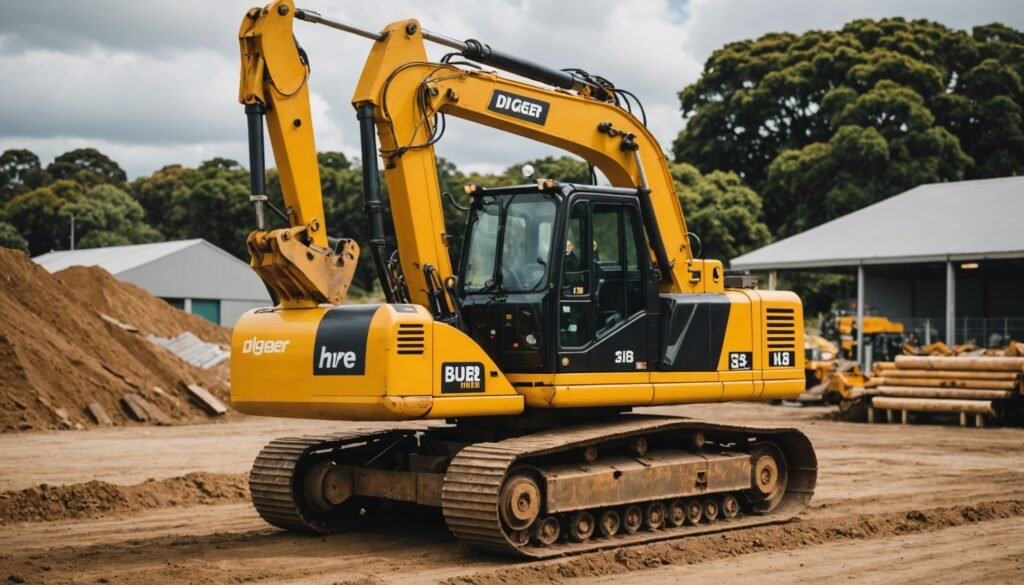
Getting digger hire wrong in Auckland can cost you more than just money—it can delay your project by weeks. Whether you’re excavating for a pool, preparing a building site, or installing drainage, choosing the wrong machine size or an inexperienced operator on Auckland’s volcanic soil and basalt rock can turn a straightforward job into a nightmare.
That’s where this guide becomes essential. We’ll walk you through matching digger sizes to your project scope, comparing self-drive versus operator hire, and understanding the total costs involved—so you can plan with confidence and avoid the mistakes that catch most property owners off guard.
- Match digger size to your project scope: Mini diggers (1.5T-3T) handle residential tasks like pool excavation and landscaping, while mid-range (5T-8T) diggers suit larger earthworks, and 20T+ excavators tackle commercial-scale projects.
- Hire with an operator for Auckland’s challenging ground: Volcanic soil, basalt rock, and dense clay require experienced operators who understand local conditions and can adjust techniques accordingly.
- Factor in total costs beyond the daily rate: Delivery fees, attachment add-ons, fuel consumption, and site access requirements all impact the final quote—get itemised pricing from providers.
- Check council consent requirements early: Excavation work in Auckland often requires consent, particularly for drainage installations, retaining walls, or work near boundaries—factor approval timelines into your project schedule.
Understanding Digger Sizes and Their Ideal Applications
Choosing the right digger size for your Auckland project significantly impacts both efficiency and cost-effectiveness. Mini diggers weighing under 1.5 tonnes excel in residential backyard projects where access is limited through standard gate openings. These compact machines prove invaluable for garden renovations, small drainage installations, and landscaping projects where larger equipment would cause unnecessary damage to existing structures.
Mid-range excavators between 1.5 and 8 tonnes represent the most versatile category for Auckland’s diverse construction landscape. A 3-tonne machine typically handles residential foundation excavations, medium-sized trenching, and driveway preparations with ease. Contractors frequently select 5-8 tonne machines for larger residential developments or commercial projects where soil conditions demand more power without sacrificing maneuverability around existing structures.
Large excavators exceeding 10 tonnes serve major civil engineering projects, commercial developments, and earthworks requiring substantial material displacement. These machines deliver impressive digging depths and bucket capacities but require adequate site access and operational space. Understanding your project’s scope determines whether investing in larger equipment yields genuine time savings or simply increases operational costs unnecessarily.
Cost Structure and Budget Planning for Digger Hire
Daily hire rates in Auckland typically range from $350 for compact mini diggers to over $1,200 for large excavators, with operators adding $450-600 daily depending on expertise level and project complexity. A residential client undertaking a swimming pool excavation discovered that weekend work attracted premium rates, costing an additional 25% compared to weekday scheduling. By shifting operations to Monday through Wednesday, they saved approximately $1,800 across the three-week project duration.
Transport costs frequently surprise first-time hirers, with trailer delivery within Auckland ranging from $150-400 each way depending on distance and machine size. A construction company in North Shore learned to consolidate multiple small projects within their delivery route, negotiating a 30% reduction in transport fees by scheduling sequential jobs that justified a single trailer deployment rather than individual trips for each site.
Additional expenses include site supervision requirements, fuel consumption (averaging 8-15 litres hourly for mid-size machines), and potential damage waivers. Comprehensive insurance coverage adds approximately 10-15% to base hire costs but eliminates significant financial exposure on projects involving underground services or adjacent structures.
Operational Requirements and Safety Compliance
New Zealand’s health and safety regulations for construction plant equipment mandate that all digger operators hold appropriate licenses and demonstrate competency in hazard identification. Hirers must ensure site-specific risk assessments address underground services including telecommunications cables, gas lines, and stormwater systems before commencing excavation work.
Auckland’s variable soil conditions require careful assessment before machine deployment. Clay-heavy areas in suburbs like Pukekohe and Franklin present different challenges compared to volcanic soils in central regions, affecting bucket selection, slewing angles, and spoil placement strategies. Projects proceeding without soil analysis frequently encounter unexpected ground conditions that delay timelines and inflate costs.
Overhead power lines demand particular vigilance throughout Auckland’s urban and semi-rural areas. Maintaining minimum clearance distances and utilizing spotter assistance prevents potentially fatal incidents while avoiding expensive equipment damage and project interruptions that can cost thousands in lost productivity.
Maximizing Efficiency Through Project Planning
Thorough pre-project planning distinguishes successful digger hire outcomes from costly disappointments. Accurate survey documentation enables precise bucket selection and machine positioning, reducing unnecessary repositioning that consumes both time and fuel. Projects that invested two days in detailed planning before machine arrival consistently completed 40% faster than those beginning work immediately upon delivery.
Material management strategies significantly influence digger hire efficiency in Auckland projects. Spoil placement location, truck scheduling for material removal, and working space allocation prevent the common bottleneck of machines waiting for trucks or trucks waiting for machines. A civil contractor serving the North Shore development corridor implemented coordinated truck-to-digger ratios of 3:1, maintaining continuous operation and completing road infrastructure projects 15% ahead of contracted timelines.
Weather contingencies deserve explicit attention in project scheduling. Auckland’s seasonal rainfall transforms some ground conditions from manageable to problematic within hours. Contractors who established contingency plans for wet weather operations maintained project momentum during spring showers while competitors experienced extended delays and additional drying costs.
Evaluating Total Value Beyond Base Hire Rates
Comparing digger hire options requires evaluating total ownership costs alongside competitive hourly or daily rates. Well-maintained machines from established providers reduce breakdown risks that disrupt project schedules and generate expensive downtime charges. A roofing contractor discovered that selecting the cheapest available option resulted in three mechanical failures during a single week, ultimately costing 60% more than the initially higher quote from a reputable provider.
Customer support quality varies substantially across Auckland’s digger hire market. Providers offering 24-hour response capabilities, backup machine availability, and experienced technical staff deliver value beyond equipment specifications alone. Projects operating to tight deadlines particularly benefit from providers who prioritize rapid resolution of operational issues rather than extended equipment replacement processes.
Digital booking platforms and transparent pricing structures streamline the hiring process while reducing administrative overhead. Providers offering online quote generation, instant availability confirmation, and digital documentation processing help contractors maintain accurate project budgeting throughout the equipment rental period.
Successful digger hire in Auckland requires balancing machine specifications, budget constraints, and project requirements through informed decision-making. Understanding how excavator sizes match applications, accounting for total costs beyond base rates, and prioritizing safety compliance helps contractors avoid common pitfalls that derail timelines and inflate expenses.
Thorough pre-project planning consistently delivers measurable efficiency gains. Partner with established Auckland digger hire providers who offer transparent pricing, reliable equipment, and responsive support for your next excavation project.