
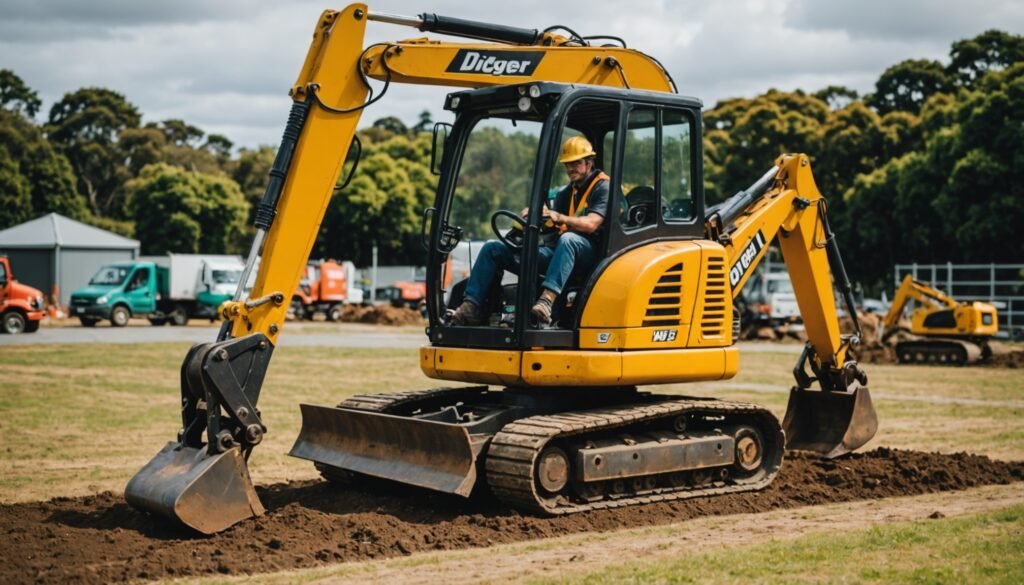
Choosing the wrong size digger for your Auckland project can cost you days of wasted time and hundreds of dollars in unnecessary expenses. Mini diggers ranging from 1.5 to 5 tonnes offer impressive versatility for residential work, but matching the machine to your specific job requirements makes all the difference between a smooth project and a costly headache.
Whether you’re tackling swimming pool excavation, drainage trenching, or stump removal in your backyard, understanding digger sizes, site access requirements, and local ground conditions is essential for planning confidently. This guide walks you through everything you need to know about digger hire in Auckland—from selecting the right machine to budgeting for your project.
- Match digger size to your project scope: Mini diggers range from 1.5 to 5 tonnes—small 1.5-tonne machines handle tight residential spaces like backyards, while larger 3-5 tonne units are better for pool excavation and significant trenching.
- Verify site access before booking: Standard mini diggers require at least 900mm clearance through gates; narrow-access sites may need specialist compact units or manual excavation alternatives.
- Factor in operator costs and project duration: Self-drive hire saves money but requires experience; operator-included hire costs more upfront but ensures work is done safely and efficiently, especially in Auckland’s variable ground conditions.
- Check council consent requirements early: Drainage work, pool excavation, and significant structural alterations often require Auckland Council consent—factor this into your project timeline and budget.
Assessing Your Site Before Pool Excavation Begins
The success of any swimming pool excavation project in Auckland begins with a comprehensive site assessment. Before any digger hire in Auckland commences, experienced operators evaluate soil composition, underground utilities, drainage patterns, and access points. Clay-heavy soils common in certain Auckland suburbs require different handling techniques compared to sandy or rocky terrain, directly impacting equipment selection and project duration. A thorough assessment typically identifies potential obstacles such as existing landscaping, retaining walls, or underground pipes that may require relocation or careful navigation during the digging phase.
In one notable residential project in the North Shore area, initial site assessment revealed an unexpected rock formation extending 1.2 meters below the planned excavation depth. This discovery, made during the planning phase, allowed the excavation team to adjust their approach and bring in a rock-breaking attachment, ultimately completing the project within the revised timeline rather than facing costly delays mid-excavation. Early identification of site-specific challenges consistently proves more cost-effective than reactive problem-solving during active construction.
Selecting the Right Digger for Your Pool Project
Pool excavation projects demand careful equipment selection based on multiple factors including pool dimensions, available access, and site conditions. Standard residential swimming pools typically require excavations measuring 8-12 meters in length, 4-6 meters in width, and 1.5-2.5 meters in depth. For these specifications, mid-sized excavators in the 5-8 tonne range prove most effective, offering sufficient digging depth while maintaining the precision necessary for curved or rectangular pool designs. Larger commercial pools may require heavy-duty equipment exceeding 15 tonnes, particularly when dealing with complex shapes or multiple depth zones.
Access considerations often determine equipment feasibility. Properties with narrow driveways, limited turnaround space, or existing structures within close proximity require compact diggers that can maneuver effectively while maintaining excavation capability. The swimming pool digging process benefits significantly from equipment featuring hydraulic thumbs for efficient debris removal and precision bucket attachments designed for finishing work along pool walls and floors.
The Excavation Process: From Marking to Rough Grade
The actual excavation follows a systematic approach designed to maintain accuracy throughout the process. Professional operators begin by establishing precise reference points using survey equipment, ensuring the pool maintains correct alignment with property boundaries and surrounding structures. The rough cut phase removes primary soil volume using the excavator bucket, with operators following marked depth indicators to achieve approximate specifications before transitioning to precision work.
During the finishing phase, operators switch to narrower buckets and reduced digging speed to achieve clean, straight walls and properly sloped floors. Pool excavations require specific gradient requirements—typically a 1:3 slope on entry walls transitioning to 1:1 or steeper on deep-end walls. Maintaining these specifications throughout the excavation ensures proper water volume calculations and structural integrity for the subsequent lining or concrete shell installation.
Material removal logistics form a critical component of excavation planning. A standard residential pool excavation generates between 80-150 cubic meters of spoil material, depending on pool dimensions and depth. This material must be transported off-site or redistributed within the property during the excavation process. Efficient spoil management prevents workspace congestion that slows excavation progress and increases labor costs.
Managing Common Challenges in Pool Excavation
Unexpected ground conditions frequently emerge during pool excavation, requiring adaptive responses from operators and project managers. Water table fluctuations, particularly in coastal Auckland areas, may necessitate dewatering equipment or modified excavation techniques to maintain workable conditions. Sandy soils prone to collapse require immediate shoring or stepped excavation approaches rather than clean vertical cuts that might become unstable during rainfall events.
Underground services present both safety and logistical challenges. Proximity to sewer lines, stormwater systems, or underground electrical conduits requires careful navigation and sometimes manual intervention in areas where mechanical excavation poses risks. Professional operators maintain communication with local utility services to obtain accurate service maps before excavation commences, reducing the risk of accidental damage that could halt projects and incur significant repair costs.
Post-Excavation Site Preparation
Following primary excavation completion, additional work prepares the site for pool installation. Trenching services often prove necessary to connect the excavated pool area to existing drainage systems, water supply lines, or electrical conduits for lighting and filtration equipment. These connections require precise grading to ensure proper flow direction and prevent future drainage issues that could compromise the pool structure or surrounding landscaping.
The excavated pool base requires compaction and leveling before construction continues. Improperly prepared bases lead to settlement issues that manifest as cracks or structural failures in completed pools. Professional excavation services ensure the base reaches appropriate compaction levels, typically 95% of maximum dry density, before handing the site over to pool construction crews. This attention to foundational preparation significantly reduces long-term maintenance costs and structural concerns for pool owners.
Successful pool excavation in Auckland requires meticulous planning, appropriate equipment selection, and skilled operators who can adapt to site-specific challenges. From initial soil assessment through final base preparation, each phase contributes to the structural integrity and longevity of your pool investment.
Engaging experienced digger hire professionals in Auckland ensures your project benefits from comprehensive site evaluation and proper trenching services that prepare the site for seamless pool installation. Contact qualified excavation specialists to discuss your project requirements and establish a foundation for lasting backyard enjoyment.