
Getting auckland earthmoving right the first time saves property owners thousands in delay costs and rework. Yet many excavation projects stall because of poor equipment selection, unexpected ground conditions, or unclear consent requirements—mistakes that are entirely preventable with proper planning.
Auckland’s volcanic basalt soil and variable site access create excavation challenges that differ sharply from other regions. Knowing which digger size you need, understanding when council consent applies, and choosing contractors familiar with local ground conditions makes the difference between a smooth build and a budget blowout.
This guide covers everything you need to approach your excavation confidently—from machine sizing and cost breakdowns to council compliance and contractor selection.
- Match machine size to your project scope: Digger sizes range from 1.5-tonne mini excavators for tight residential sites to 20-tonne machines for commercial earthworks—correct sizing directly impacts cost and efficiency.
- Budget for site-specific variables: Auckland’s volcanic soil and basalt rock conditions often require specialized equipment and longer timeframes, making detailed site assessment essential before quoting.
- Council consent isn’t always required: Minor excavations under 1 cubic metre may bypass consent, but retaining walls, drainage systems, and pool installations typically require approval—factor this into your project timeline.
- Choose contractors with local ground knowledge: Experienced Auckland operators understand soil stability, access constraints, and how volcanic substrate affects excavation methods—critical for avoiding costly surprises.
- Request itemized quotes to compare fairly: Look beyond total price—breakdowns covering machine hire, operator time, site clearing, and soil disposal reveal true project costs and contractor transparency.
Understanding Digger Classifications for Auckland Earthmoving Projects
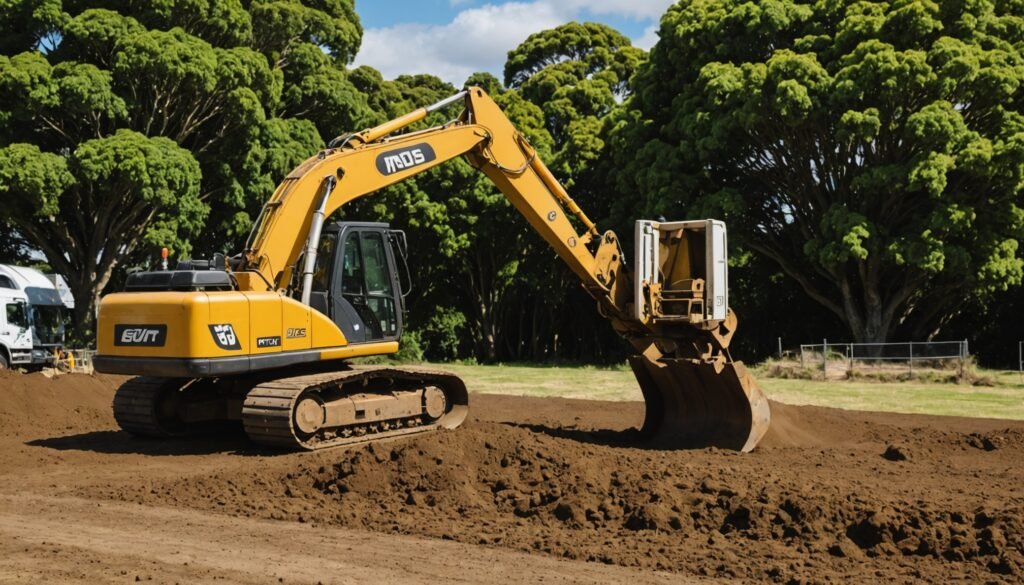
The New Zealand earthmoving industry classifies excavators primarily by operating weight, which directly correlates to bucket capacity and digging depth capabilities. Micro excavators under 1 tonne excel in confined residential spaces like tight backyards in suburbs such as Ponsonby or Grey Lynn, where larger equipment would damage existing landscaping. Mini excavators weighing 1 to 4 tonnes offer the versatility most homeowners need for tasks ranging from swimming pool excavation to drainage system installation. Midi excavators between 5 and 10 tonnes bridge the gap between residential and commercial applications, making them ideal for larger section builds and significant landscaping transformations.
Standard full-size excavators from 12 to 45 tonnes dominate commercial construction sites and infrastructure projects, while mass excavation machines exceeding 50 tonnes handle major civil engineering works such as motorway expansions and commercial development earthworks. Matching your digger hire selection in Auckland to your specific project scale prevents both under-powered performance and unnecessarily high rental costs. Understanding these classifications helps property owners and project managers make informed decisions before contacting earthmoving contractors.
Site Access and Terrain Considerations
Auckland’s diverse topography presents unique challenges that directly impact equipment selection. Steep sections common in areas like One Tree Hill, Mount Wellington, or the North Shore require machines with superior gradient capabilities and may necessitate smaller equipment transported via trailer rather than self-propelled tracked excavators. Muddy sites following Auckland’s frequent rainfall events demand machines with adequate ground pressure distribution to prevent sinking and track damage.
Overhead clearance restrictions in areas with extensive power lines or mature tree canopies rule out full-size excavators with boom swing capabilities in their extended position. Driveway width and gate access measurements determine whether standard-width machines can reach the work area or if compact mini excavators become necessary despite potentially longer project timelines. Professional earthmoving services conduct thorough site assessments before recommending equipment, accounting for these variable factors that DIY hirers often overlook.
Attachment Compatibility and Specialized Applications
Modern excavator versatility extends far beyond standard bucket digging through hydraulic attachment systems that transform single machines into multi-function equipment. Hydraulic breakers handle rock breaking and concrete demolition that standard buckets cannot penetrate. Rock buckets with reinforced teeth cut through compacted volcanic soil common throughout the Auckland region more efficiently than general-purpose buckets. Rock grapples enable safe tree stump removal and debris clearing, while tilt rotators provide precise angle control for drainage grading and trenching operations.
When evaluating earth moving services, confirming attachment availability prevents equipment changes mid-project that inflate costs and extend timelines. Specific attachments suit particular soil conditions—the pumice soils of the Waitakere Ranges behave differently from the clay compositions found in South Auckland, requiring adjusted equipment configurations. Rippers attached to standard buckets break up compacted subgrade material before bulk excavation begins, improving efficiency on sites where previous construction or natural compaction has occurred.
Operational Efficiency and Project Timeline Optimization
The relationship between machine capacity and project duration follows diminishing returns curves that informed project managers understand. Selecting a machine slightly larger than minimally required often reduces total project cost through faster completion that offsets higher daily rental rates. A 3-tonne excavator completing a residential drainage project in three days costs less overall than a 1.5-tonne machine requiring five days of operation when daily rates differ by only modest percentages.
Loading efficiency also varies significantly between machine classes, affecting whether excavated material requires single or multiple machine passes to load into trucks for removal. The Auckland earthmoving industry tracks productivity metrics that experienced operators understand intuitively—cycles per hour, cubic meters per shift, and fuel consumption rates all factor into selecting cost-effective equipment. Projects requiring material to be loaded into trucks benefit from machines with adequate bucket capacity and hydraulic performance to minimize truck waiting time.
Hiring Models and Cost Structures
Auckland digger hire operates primarily through dry hire arrangements where customers operate equipment themselves, wet hire packages including experienced operators, or project-based quotations for complete earthmoving solutions. Dry hire suits experienced operators with valid tickets who understand machine capabilities and limitations, offering maximum flexibility but requiring significant expertise to avoid costly mistakes. Wet hire arrangements provide trained professionals who complete work efficiently while eliminating insurance and transportation responsibilities from the customer.
Daily, weekly, and monthly rental structures create tiered pricing that rewards longer commitments—weekly rates typically reduce daily costs by 20 to 30 percent compared to single-day bookings. Transport costs to and from sites often represent a significant portion of total hire expense, particularly for outer Auckland locations distant from equipment depots. Comparing total project costs across different hiring models reveals that self-operated dry hire carries hidden expenses through potential damage liability, fuel responsibility, and reduced efficiency that often eliminate perceived savings.
Conclusion
Selecting the right digger for your Auckland project requires balancing machine capacity against site constraints, attachment needs, and budget considerations. Understanding excavator classifications, terrain challenges, and the true cost differences between hiring models prevents common mistakes that lead to project delays and unexpected expenses. Whether undertaking residential drainage work or commercial earthworks, informed equipment selection delivers measurable returns through improved efficiency and reduced downtime.
Professional earthmoving contractors provide valuable guidance through site assessments that account for factors DIY hirers frequently overlook. For comprehensive digger hire solutions tailored to Auckland’s unique conditions, explore the available equipment options and connect with experienced operators who understand local soil conditions and project requirements.