
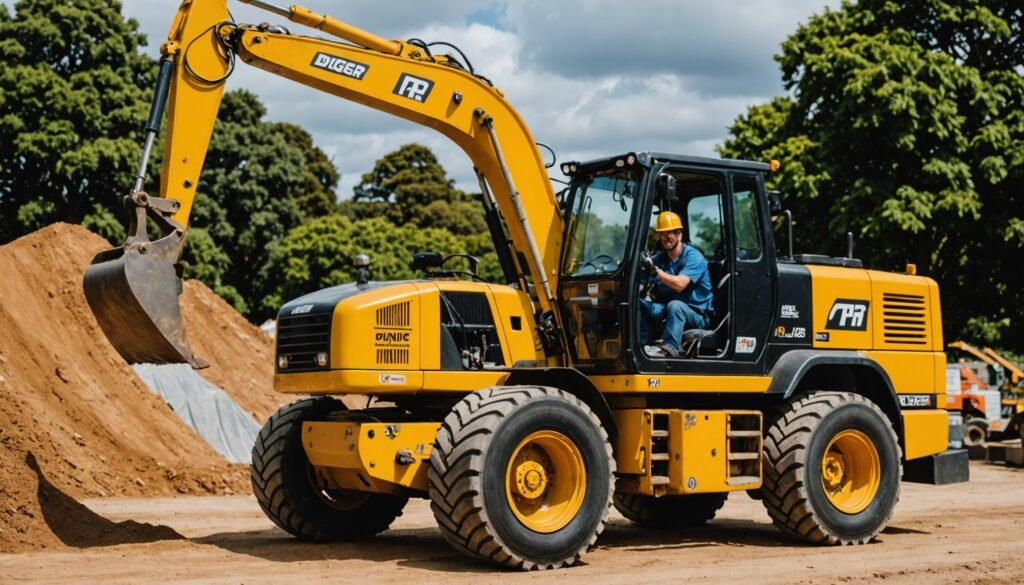
A single weekend with the right equipment can accomplish what weeks of manual labor cannot. For Auckland homeowners and contractors tackling earthworks, trenching, or site preparation, digger hire transforms ambitious DIY projects from exhausting undertakings into manageable achievements.
The digger hire Auckland market offers solutions for projects of every scale, from compact mini excavators perfect for residential landscaping to heavy-duty machines built for commercial earthworks. However, choosing the wrong machine, overlooking insurance requirements, or misjudging transport costs can quickly turn a smart hire into an expensive mistake.
This guide walks you through everything you need to know about digger hire Auckland, from selecting the right machine size and comparing daily rates to understanding insurance coverage and delivery logistics.
- Match digger size to your project scope: Mini excavators (1.5-3T) work best for residential landscaping, while larger 5-8T machines handle commercial earthworks and major trenching.
- Compare daily versus weekly hire rates: Auckland digger hire typically ranges from $250-450/day for compact models, with significant savings on multi-day and weekly rentals.
- Verify insurance and operator licensing: Ensure the hire company provides comprehensive insurance coverage and confirm whether you need a Site Safe certificate or certified operator for your worksite.
- Account for transport and delivery costs: Budget an additional $150-300 for delivery and pickup within Auckland, or arrange self-transport if you have a suitable trailer.
Matching Diggers to Project Scope: Avoiding Costly Mismatches
Selecting an incorrectly sized digger ranks among the most frequent sources of budget overruns and project delays in residential and commercial construction. A mini excavator with insufficient reach forces operators to reposition constantly, while an oversized machine compacts soil unnecessarily and damages existing landscaping. Auckland’s varied terrain—from the volcanic soils of the central suburbs to the clay-heavy sections in areas like Pukekohe and Waiuku—requires careful consideration before confirming any hire booking.
For residential landscaping projects involving garden bed preparation or small drainage installations, a 1.5 to 3-tonne digger hire in Auckland typically provides adequate capability without excessive daily rates. These compact machines navigate through standard residential gates and operate effectively on sloped sites where larger equipment becomes unstable. A case study from a West Harbour property demonstrated that choosing a 2-tonne machine for a retaining wall project reduced total hire duration from an estimated four days to just two and a half days, generating approximately $800 in combined fuel and labour savings.
Understanding Daily Rates and What Drives Diggers Hire Auckland Costs
Daily hire rates for diggers in Auckland vary based on machine weight class, attachment availability, and delivery distance. Most providers structure pricing around a base daily rate with additional charges for transport to and from the worksite. The transport component becomes particularly significant for projects located in outer suburbs or on sites without established vehicle access. Projects in areas like Albany, Silverdale, or the North Shore generally incur lower delivery costs than properties in more remote locations.
Attachment selection significantly impacts overall project cost efficiency. A single digger unit paired with a hydraulic hammer attachment handles both initial excavation and rock breaking, eliminating the need for separate equipment hire. However, attachment changes consume time on-site, and not all machine classes accommodate heavy-duty implements. Evaluating total project requirements—including the need for tiltrotators, grapples, or specialized buckets—before booking helps prevent mid-project equipment swaps that disrupt schedules.
Operator Certification and Site Safety Requirements
New Zealand workplace regulations require that all heavy equipment operators hold appropriate qualifications, whether for company-owned machinery or hired equipment. Inexperienced operators represent a measurable risk factor; research from WorkSafe New Zealand indicates that equipment tip-overs and contact incidents frequently trace to operator unfamiliarity with machine limitations rather than mechanical failures. Reputable digger hire services offer machines with trained operators included, providing liability protection and reducing administrative burden for property owners managing construction projects.
Site preparation significantly affects operational safety regardless of operator experience. Before digger arrival, mark all underground services using the Before You Dig service to prevent accidental utility strikes. Clear the immediate work area of debris, temporary structures, and any materials that could obstruct the machine’s travel path. For projects involving excavation deeper than 1.5 metres, formal trench support systems or shoring become legally required, adding planning requirements that should be factored into project timelines and budgets.
Managing Site Access and Logistics for Urban Auckland Projects
Urban construction sites in suburbs like Grey Lynn, Ponsonby, or Mt Eden present unique access challenges that rural properties avoid entirely. Street parking for delivery vehicles, council permits for temporary traffic management, and neighbour notification requirements all extend the pre-construction planning phase. A Newmarket property owner undertaking swimming pool excavation learned this lesson when insufficient clearance measurement led to a 90-minute delay while the delivery driver repositioned the truck and arranged a smaller alternative machine.
For projects involving structures near boundary lines or shared driveways, reviewing the local council’s District Plan provisions regarding building setbacks and excavation near neighbouring properties prevents disputes. The Auckland Council planning portal provides specific information for each suburb, though consultation with a licensed surveyor remains advisable before committing to foundation depths or retaining wall positions.
Maximizing Value Through Efficient Project Scheduling
Each day of digger hire represents a fixed cost regardless of utilization levels, making efficient scheduling essential for budget control. Consolidating all excavation activities into consecutive working days eliminates the problem of paying for idle equipment while waiting for other trades to complete preparatory work. Site managers who pre-coordinate concrete deliveries, drainage inspections, and material staging reduce the likelihood of digger downtime that inflates project costs without adding value.
Weather dependency presents unavoidable scheduling challenges, particularly during Auckland’s winter months when rainfall frequently renders excavation sites inaccessible. Building contingency time into project timelines—typically adding 15 to 20 percent beyond estimated duration—accommodates weather delays without requiring emergency extensions on hire agreements. The volcanic clay soils common throughout the Auckland region become particularly problematic when saturated, sometimes requiring dewatering or extended drying periods before compaction can proceed safely.
Building Long-Term Relationships with Diggers Hire Auckland Providers
Contractors who maintain ongoing relationships with digger hire Auckland providers consistently report better service responsiveness and more flexible terms than occasional hirers. Established relationships enable priority booking during peak construction seasons, preferred rates for repeat business, and faster resolution when equipment issues arise mid-project. For property developers completing multiple projects annually, this reliability translates into smoother operations and more predictable cost structures.
Documentation practices also improve with established provider relationships. Reputable services maintain digital records of previous hire periods, on-site incident reports, and machine maintenance histories that prove valuable for large-scale projects requiring detailed records for resource consent applications or insurance purposes. This administrative efficiency complements the practical benefits of familiar equipment and trusted operators, creating partnership dynamics that serve both parties across multiple project cycles.
Conclusion
Successful digger hire in Auckland requires balancing machine specifications with project requirements, budget constraints, and site logistics. Understanding daily rate structures, prioritizing operator certification, and planning for Auckland’s terrain challenges helps property owners and contractors avoid common pitfalls that escalate costs and delay timelines. Thorough pre-construction preparation—including underground service marking and access planning—transforms problematic sites into manageable excavation environments.
Building lasting relationships with digger hire Auckland providers delivers compounding benefits. From priority booking during peak seasons to flexible terms, these partnerships create reliability that extends beyond individual hire transactions. Invest the time to select the right provider now, and every future project benefits from that foundation.